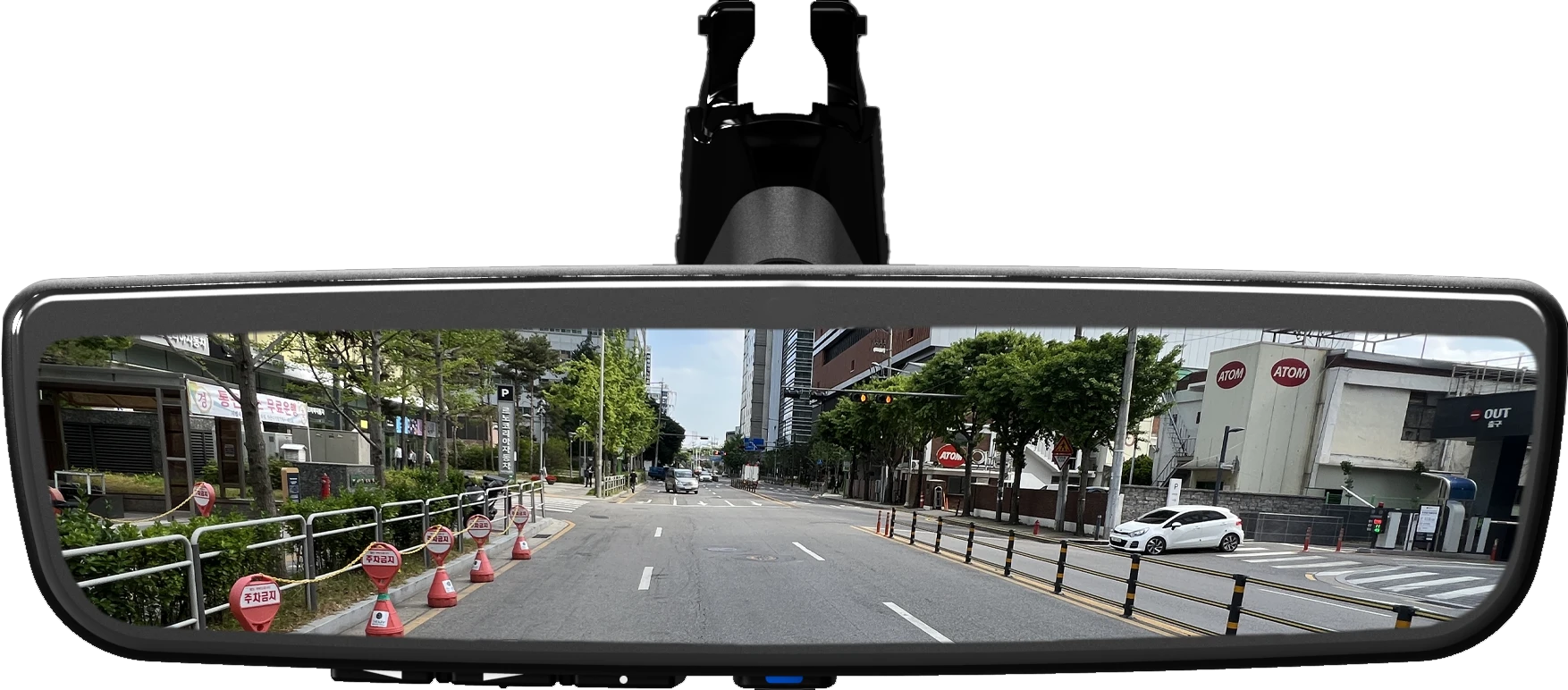
One range, very different rear views
Toyota's catalogue spans tall body-on-frame SUVs, work pickups, family crossovers and compact hatchbacks, and each has its own rear-visibility issue. A Toyota digital rear view mirror addresses them with one approach: an external camera mounted past the obstruction, feeding a full-width mirror display.
The Land Cruiser's third row, the Tacoma and Tundra's beds and canopies, and the RAV4 and Highlander's loaded cargo areas are all situations where the optical mirror falls short and a camera does not.
It is worth being specific about which Toyota you drive, because the win lands differently in each. In a Tundra or Tacoma it is seeing past a canopy and a trailer hitch; in a Sienna it is seeing past a third row and a full luggage bay on a family trip; in a Prius it is replacing the split rear glass, with its horizontal bar across the view, with one clean camera image. The product is the same — the moment it proves its worth changes from cabin to cabin.
Fitment across the Toyota range
Pricing is straightforward: the Land Cruiser uses premium fitment, and the rest of the range below sits at standard pricing. The figure on each card is that model's starting price; open a model to see all four hardware variants on its page.
A clean, reversible upgrade
Because a TrueSight unit is an OEM-style replacement rather than a permanent modification, it suits owners who care about keeping a Toyota original. It seats on the factory mount, wires in cleanly, and can be returned to the standard mirror if you ever sell or hand the vehicle on. There is no cutting, no drilling into trim, and no adhesive pad left on the windscreen.
For a brand whose owners often keep cars for the long run, that reversibility matters as much as the daily improvement in visibility.
It also sits well with how Toyotas are used. Many are family cars, work trucks or high-mileage runabouts that get sold on or handed down, and a modification that can be undone protects that resale value. You get the clearer rear view while you own the vehicle, and the option to return it to standard whenever it changes hands.
From work trucks to family crossovers
What makes the Toyota line interesting is how different the use cases are under one badge. A Tacoma or Tundra owner cares about a canopy, a loaded bed and a trailer; a RAV4 or Highlander driver cares about a packed cargo area and rear headrests on the school run; a Land Cruiser owner deals with a genuine third-row blind zone off-road. The same camera-mirror idea answers all three, but the value shows up in different moments.
That is also why fitment is per-model rather than one-size-fits-all: the bracket and camera placement that suit a full-size pickup are not the ones that suit a compact hybrid. Choosing your exact Toyota below loads the right fit and the four hardware variants for it. The category guide covers the technology, and the camera-mirror guide covers the external camera in more detail.
Built to Toyota-grade durability expectations
Every unit shares the same core — an LVDS 60fps feed, a Sony IMX sensor, an IP69K external camera and 72 automotive-grade tests behind it, with a regional warranty. For trucks in particular, that IP69K rating means a muddy work site and a pressure wash afterwards are routine.
Frequently asked questions
Recently Verified — Supported
These Toyota vehicles are verified as supported. Contact our fitment team for the exact product configuration.
All supported models
Toyota 4Runner · Toyota Alphard · Toyota Aqua · Toyota Avalon · Toyota Aygo X · Toyota C-HR · Toyota C-HR+ · Toyota Camry · Toyota Century · Toyota Corolla · Toyota Corolla Cross · Toyota Crown · Toyota Crown Signia · Toyota Crown Sport · Toyota Fortuner · Toyota GR Corolla · Toyota GR Yaris · Toyota GR86 · Toyota Grand Highlander · Toyota Granvia · Toyota Hiace · Toyota Highlander · Toyota Hilux · Toyota Innova · Toyota Land Cruiser · Toyota Land Cruiser 70 · Toyota Land Cruiser FJ · Toyota Liteace · Toyota Mirai · Toyota Noah · Toyota Prius · Toyota Proace · Toyota Proace City · Toyota Proace Max · Toyota RAV4 · Toyota Raize · Toyota Roomy · Toyota Sequoia · Toyota Sienna · Toyota Sienta · Toyota Supra · Toyota Tacoma · Toyota Tundra · Toyota Urban Cruiser · Toyota Vellfire · Toyota Veloz · Toyota Venza · Toyota Voxy · Toyota Yaris · Toyota Yaris Cross · Toyota bZ4X · Toyota bZ4X Touring