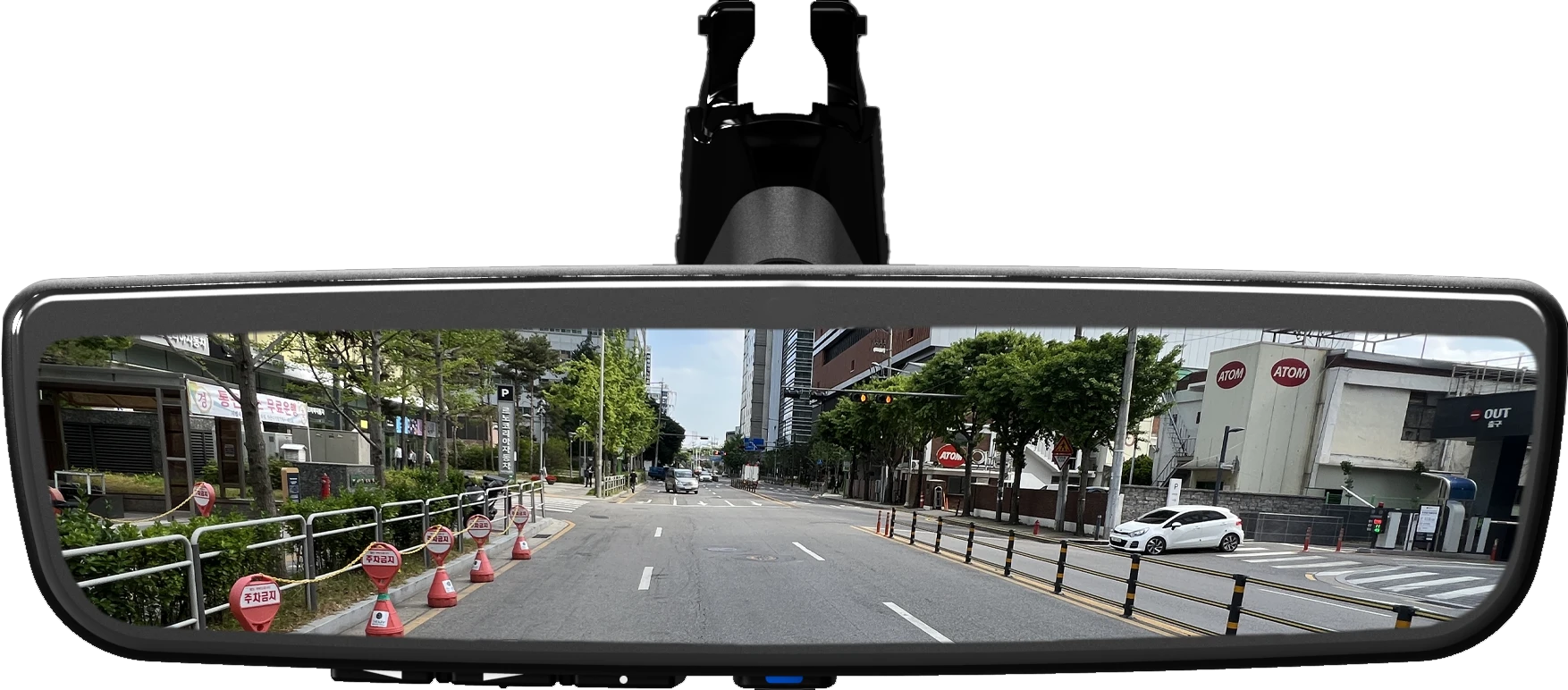
Why a camera mirror suits a Tesla
Tesla cabins are minimalist and the rear glass is often raked or, on Model 3 and Model Y, part of a long sloping roofline that shrinks the optical view. A Tesla digital rear view mirror replaces that compromised reflection with a wide camera feed while keeping the clean, uncluttered look the interior is known for.
Each unit is an OEM-style replacement on a Tesla-specific bracket, not a strap-on, so it sits where the factory mirror did and is wired in rather than hanging off a cable.
The detail varies by model. Model 3 and Model Y use a fixed glass roof that flows into a small, steeply angled rear window, so the optical view is shallow before anything is even loaded. Model S and Model X add rear head restraints, and the taller Model X body hides the area close to the bumper. Cybertruck is the extreme case — a near-horizontal rear slot with a bed behind it leaves almost nothing for a conventional mirror to show, which is why owners there treat the camera as essential rather than optional.
Fitment across the Tesla range
The line-up below covers the models people ask about most. Pricing differs by model: Model S, Model X and Cybertruck use premium fitment, while Model 3 and Model Y sit at standard pricing. The figure on each card is the starting price for that vehicle; open a model to see all four hardware variants.
What the switch changes day to day
The benefit is easiest to picture in ordinary moments. Reversing into a tight charging bay, the low rear camera shows the kerb and the bollard a sloping rear window hides. Changing lanes on the motorway, the wide feed takes in more of the lane than the optical mirror's narrow slot. With the back seats full of passengers or a boot loaded for a trip, the view simply does not close up the way a reflection does.
None of that removes the normal mirror — you can flip back to the optical reflection any time — but for most drivers the camera quickly becomes the default.
Keeping the cabin factory-clean
Part of the appeal of a Tesla is the uncluttered interior, and a strap-on mirror with a dangling cable works against that. An OEM-style replacement is designed to preserve it: the unit takes the place of the original mirror on a Tesla-specific bracket, the wiring is routed out of sight, and the result reads as part of the car rather than an accessory bolted to it. Where the original mirror handled features like a garage remote, the replacement is built to keep them rather than drop them.
The camera side is just as discreet — a compact external unit at the rear feeds the display, so the only visible change inside is a mirror that now shows a clear, wide view of the road behind you. For the wider picture on how the technology works, the category guide and the e-mirror explainer go a level deeper.
Shared hardware, per-model fit
Whichever Tesla you drive, the core is the same: an LVDS 60fps feed for smooth motion, a Sony IMX camera for low-light clarity, an IP69K external housing, and a platform validated across 72 automotive-grade tests with a regional warranty. What changes per model is the bracket and the exact fit.
Frequently asked questions
All supported models
Tesla Cybertruck · Tesla Model 3 (Legacy) · Tesla Model 3 Highland · Tesla Model S · Tesla Model X · Tesla Model Y (Legacy) · Tesla Model Y Juniper · Tesla Model Y L · Tesla Model Y Pre-Refresh