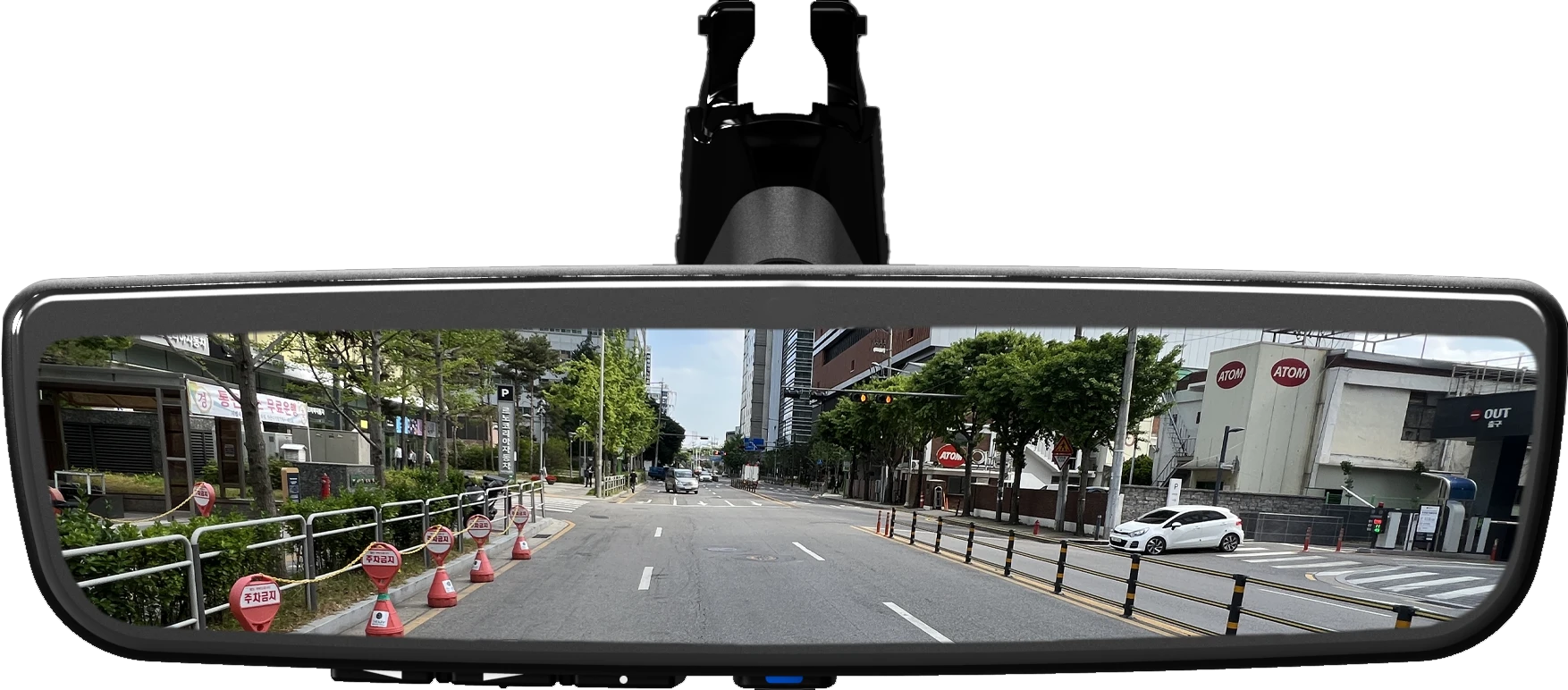
Why a camera mirror suits a Ford
Ford's line-up leans toward pickups and rugged SUVs, which is exactly where a Ford digital rear view mirror earns its place. On an F-150 or Ranger the bed, a canopy and a trailer can blank the rear window entirely; on a Bronco or Explorer it is a tall body, a spare wheel or a loaded cargo area. An external camera at the rear restores a clear view that the vehicle itself blocks, loaded or not.
Fitment across the Ford range
The range covers the best-selling F-150 and the heavy-duty F-250, the Explorer and Bronco SUVs, the mid-size Ranger and the Mustang. Pickups benefit most because their rear view is structurally blocked, but the SUVs gain from the same external-camera approach when packed for a trip or towing.
Pricing and fitment
The Ford range sits at standard pricing across the board — F-150, F-250, Explorer, Bronco, Ranger, Mustang and the others. The price shown on each model page is the one that applies.
Supported Ford models
Fitment is vehicle-specific, so the right starting point is your exact model rather than a one-size-fits-all unit. The bracket, the camera placement and the wiring route are matched to each car, which is what lets the mirror sit on the factory mount and keep the cabin looking standard. The models below are the most common upgrades in the range; open any one to confirm its fitment and see all four hardware variants.
Shared hardware, per-model fit
Whichever Ford you drive, the core is the same: an LVDS 60fps feed for smooth motion, a Sony IMX camera for low-light clarity, an IP69K external housing and 72 automotive-grade tests behind it, with a regional warranty. What changes per model is the bracket and the exact fit. If your original mirror has garage door buttons, choose an HL configuration (OT-DCM HL or OT-DCM PRO3.0 HL): it includes L2Logic's independently developed integrated garage door opener, with controls built into the mirror for supported garage door equipment, so you add a clear rear view without giving up garage control at the mirror.
Fitting and ownership
Because a TrueSight unit is an OEM-style replacement rather than a permanent modification, it suits owners who want to keep their Ford original. It seats on the factory mirror mount, wires in out of sight, and can be returned to the standard mirror if you sell the car or hand it on — there is no cutting and no adhesive pad left on the windscreen. The external camera is a compact unit at the rear, so the only visible change inside is a mirror that now shows a clear, wide view of the road behind you.
Most owners have the unit fitted by an installer, since it replaces the factory mirror and routes a camera feed through the vehicle, but it is designed to use the existing mount rather than alter the car. Each unit ships with a regional warranty, and support is on hand through the site if you need help confirming the right fitment before you order.
For the wider picture on how the technology works, the category guide and the OEM-style explainer go a level deeper, and the use-case guides cover the situations — loaded cargo, tinted glass, towing — where the camera earns its place.
Frequently asked questions
Recently Verified — Supported
These Ford vehicles are verified as supported. Contact our fitment team for the exact product configuration.
All supported models
Ford Bronco · Ford Bronco Sport · Ford Capri · Ford Edge · Ford Escape · Ford Everest · Ford Expedition · Ford Explorer · Ford F-150 · Ford F-250 · Ford Fusion · Ford GT · Ford Kuga · Ford Maverick · Ford Mondeo · Ford Mustang · Ford Mustang Mach-E · Ford Puma · Ford Ranger · Ford Territory · Ford Tourneo Connect · Ford Tourneo Courier · Ford Tourneo Custom · Ford Transit · Ford Transit Connect · Ford Transit Custom